INRO supports „Youth & Technology“
At INRO, engagement for our region also means inspiring young people about technical subjects from an early age. That's why, once again this year, we are sponsoring the „Youth & Technology“ project, which is being carried out in cooperation with the Rotary Club Aschaffenburg.
Discovering technology through play
The project, which has been established for many years, is aimed at primary school children. The goal is to foster enthusiasm for technology at an early age and to introduce girls and boys to technical issues in an age-appropriate manner.
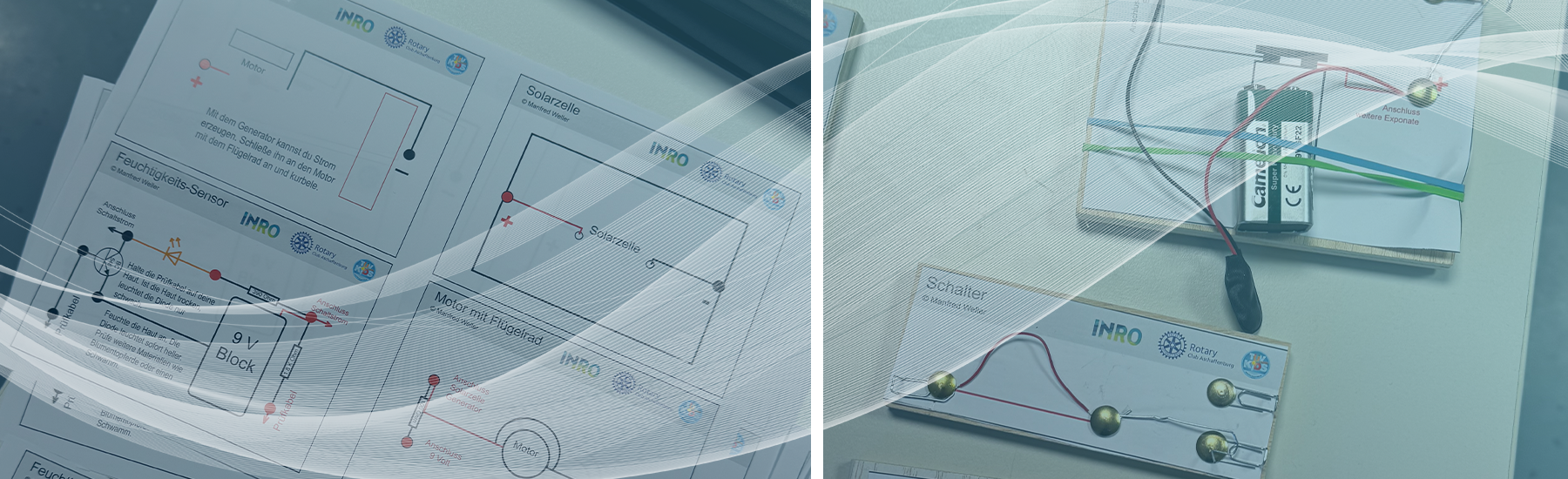
The focus is on simple, practical experiments: children, under guidance, build a functioning piece of technical equipment from everyday objects, such as a voltage tester or a generator. This is followed by extensive experimenting, testing, and trying things out.
Learning through direct experience
The concept deliberately focuses on „hands-on technology“. By building and experimenting independently, pupils deepen their existing knowledge and gain new insights. This not only makes learning understandable but also an experience that lasts. Crucial for success is the playful and age-appropriate teaching, as this is how genuine enthusiasm arises from curiosity.
Renewable energy and technical understanding
As part of „Youth & Technology,“ children gain initial insights into technical contexts – for example, by building small models that also incorporate renewable energies. This creates an early awareness of topics relevant to the future and strengthens understanding of technical processes.
Responsibility for the region
As a technology-oriented company, we see it as part of our responsibility to nurture young talent and show them opportunities. Projects such as „Youth & Technology“ make a valuable contribution to fostering curiosity, creativity and technical understanding in our region.
We are very pleased to be able to support this commitment again – and perhaps to guide the engineers of tomorrow a little further on their way, starting today.